
Some residential communities carry a more complex stormwater footprint than others. When a subdivision spans several acres with multiple green infrastructure systems working in concert, keeping those systems maintained and documented is an ongoing responsibility that requires genuine technical attention. EverGreen Infrastructure recently completed maintenance on two bioretention ponds and a formal inspection of two detention ponds at Nestledown, a single-family residential subdivision in Hamilton County, Tennessee.
Four Systems, Two Types of Work
EverGreen Infrastructure visited Nestledown on June 16, 2026, and performed two distinct scopes of work: hands-on maintenance on bioretention ponds #1 and #2, and formal inspection of detention ponds #3 and #4. Together, these four systems represent the full stormwater management picture for the subdivision.
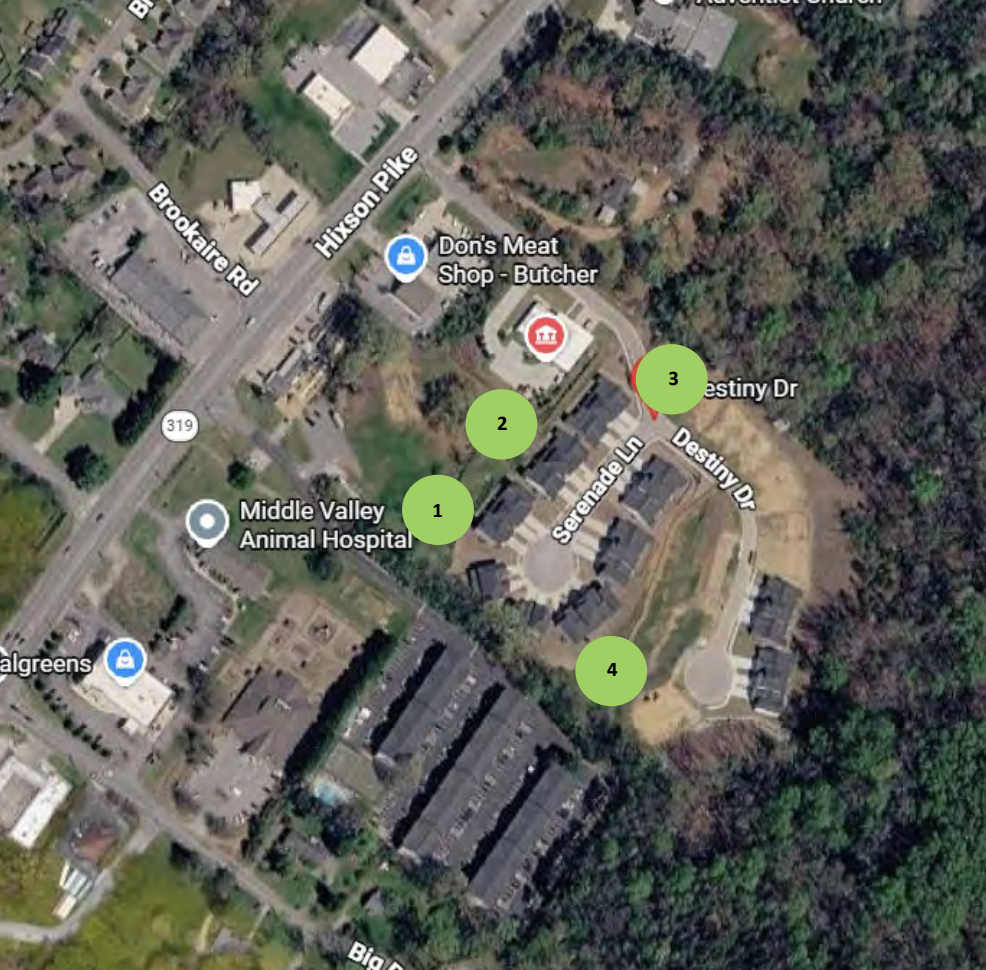
Bioretention Ponds
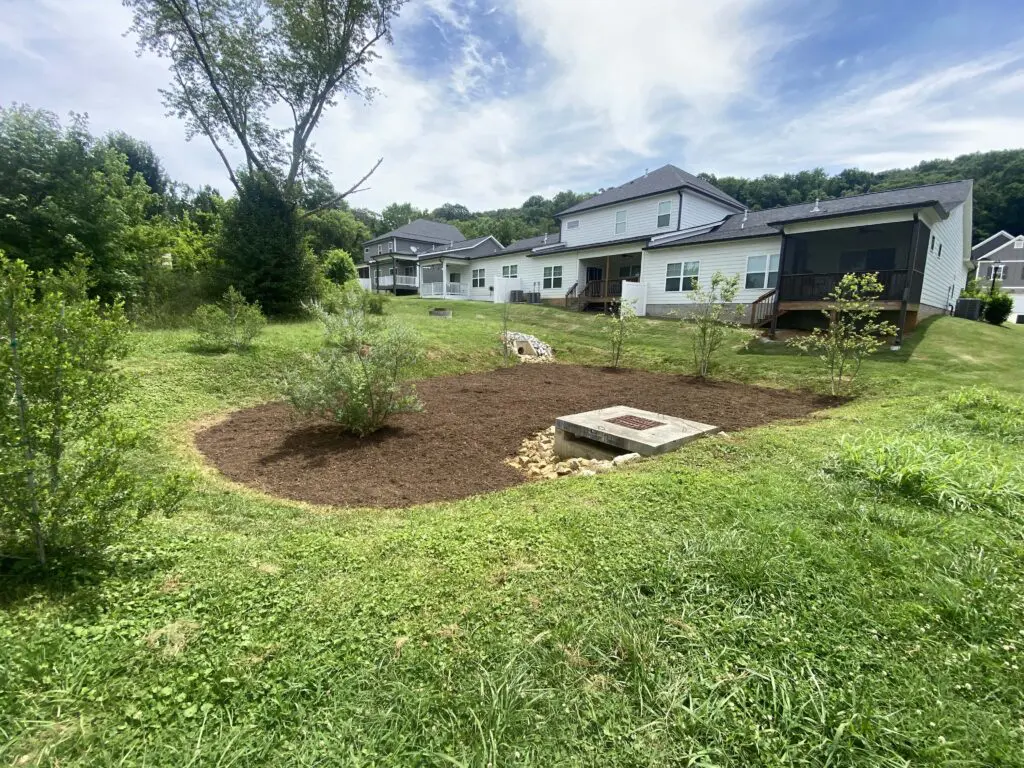
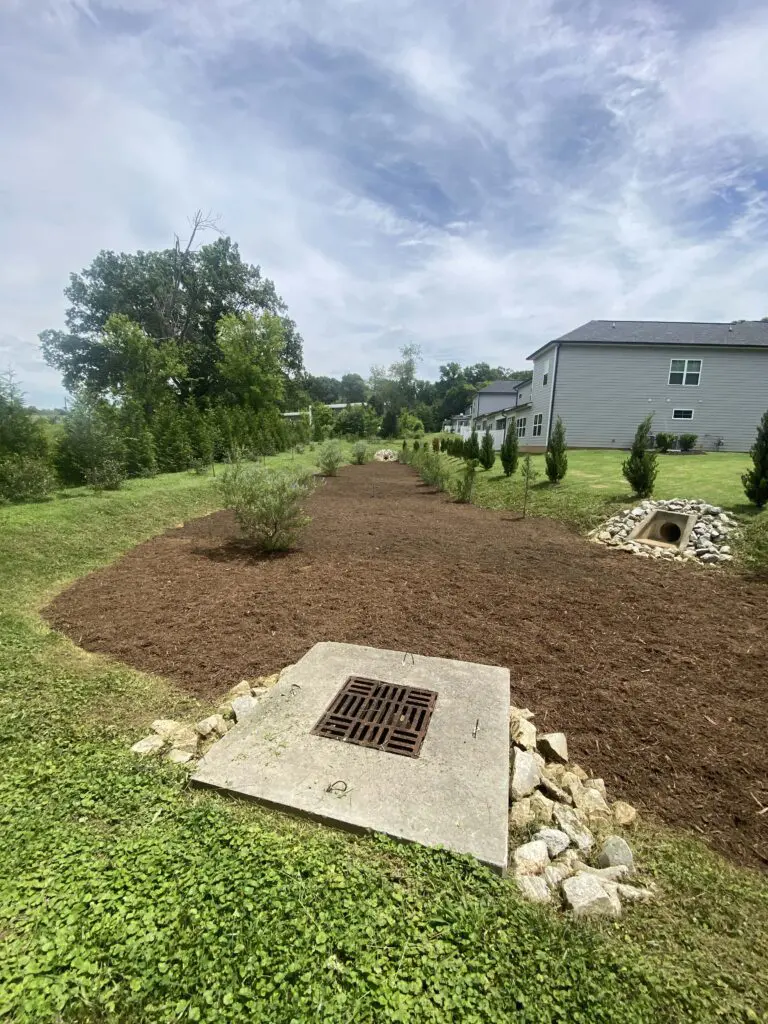
Bioretention ponds are among the more sophisticated green infrastructure practices found in residential settings. Rather than simply holding water and releasing it slowly, these systems actively treat stormwater as it passes through layers of engineered soil media, aggregate, and vegetation. Sediment, nutrients, and other pollutants are filtered out before water infiltrates into the ground or discharges to a downstream conveyance system. That treatment function makes bioretention ponds particularly valuable in residential subdivisions, where runoff picks up fertilizers, oils, and other materials as it moves across lawns, driveways, and streets. It also makes them more maintenance-intensive than a standard detention system. The soil media can become compacted or clogged over time, vegetation requires periodic management to remain effective, and inlet areas are prone to sediment accumulation that reduces flow capacity. EverGreen performed maintenance on both bioretention ponds at Nestledown to address these conditions and restore each system to its intended treatment performance.
Detention Ponds
The two detention ponds at Nestledown serve a different but equally important function. These basins capture stormwater runoff and hold it temporarily, releasing it at a controlled rate that reduces peak flow volumes and limits the risk of downstream flooding and erosion. EverGreen conducted a formal inspection of detention ponds #3 and #4, evaluating current conditions across the embankments, inlet and outlet structures, and surrounding areas to identify any maintenance needs and provide the management company with a reliable record of system status.
Maintaining a Multi-System Site
A property with four active GIPs requires a coordinated approach to stormwater stewardship. Each system has its own maintenance schedule, failure modes, and performance indicators, and the health of the overall stormwater network depends on all four functioning as intended. A bioretention pond that has lost its filtering capacity places more pressure on the detention systems downstream. A detention pond with a partially blocked outlet changes the hydraulic behavior of the entire site. EverGreen’s approach at Nestledown accounted for this interdependence. By evaluating and maintaining all four systems in a single site visit, our team was able to assess overall stormwater performance and ensure that the work performed on each individual GIP contributes to the health of the network as a whole.
EverGreen Infrastructure Serves Hamilton County and the Surrounding Region
EverGreen Infrastructure works with residential subdivisions, HOAs, commercial properties, and municipal clients throughout Hamilton County and across the region. Our team has experience with the full range of green infrastructure practices, and we bring the same standard of honest assessment and thorough maintenance to every site we work on, regardless of size or complexity. Contact EverGreen Infrastructure to schedule a GIP assessment or learn more about our maintenance programs.
EverGreen Infrastructure provides stormwater management, green infrastructure assessment, and GIP maintenance services for commercial, residential, and municipal clients. This post references work completed at Nestledown, Hamilton County, Tennessee.